I wire up ESP32, ESP8266, and Arduino boards, pull clean sensor data off them, and push it to a cloud database you can query.
Full-Stack Apps
I build web and mobile apps with Next.js, React, React Native, Node.js, and Supabase, including auth, dashboards, and payments.
Ships Fast
Hackathons taught me to go from empty repo to working demo in 36 hours. On client work that habit turns into weekly builds you can click through.
What I build
Four things I build
Most of my work lands in one of these, often two in the same project. Each one has shipped code behind it, so you can check the claim.
IoT & Connected Hardware
Sensor-to-dashboard systems built end to end: the board, the firmware, the cloud sync, and the screen your team watches it on.
ESP32 / ESP8266 / Arduino firmware
Sensor selection and interfacing
Cloud sync with Supabase or a REST API
Live monitoring dashboard with alerts
Shipped on Smart Well Management · Smart Waste Management · Smart Fingerprint Attendance
Full-Stack Web Applications
Production web apps with working auth, roles, and data behind them, built for your case rather than dropped onto a template.
Next.js + TypeScript front end
Supabase / Postgres / MySQL data layer
Role-based auth and admin dashboards
Deployment on Vercel with analytics wired in
Shipped on BloodConnect · WellnessAI · ArchBlizz
AI Features That Do Something
LLM and computer-vision features built into your product where they do a job, with cost controls and fallbacks that hold when a model fails.
LLM chat, summarisation, and extraction
Image classification and OCR pipelines
Rate limiting, credit gating, and usage caps
Prompt tuning against your own data
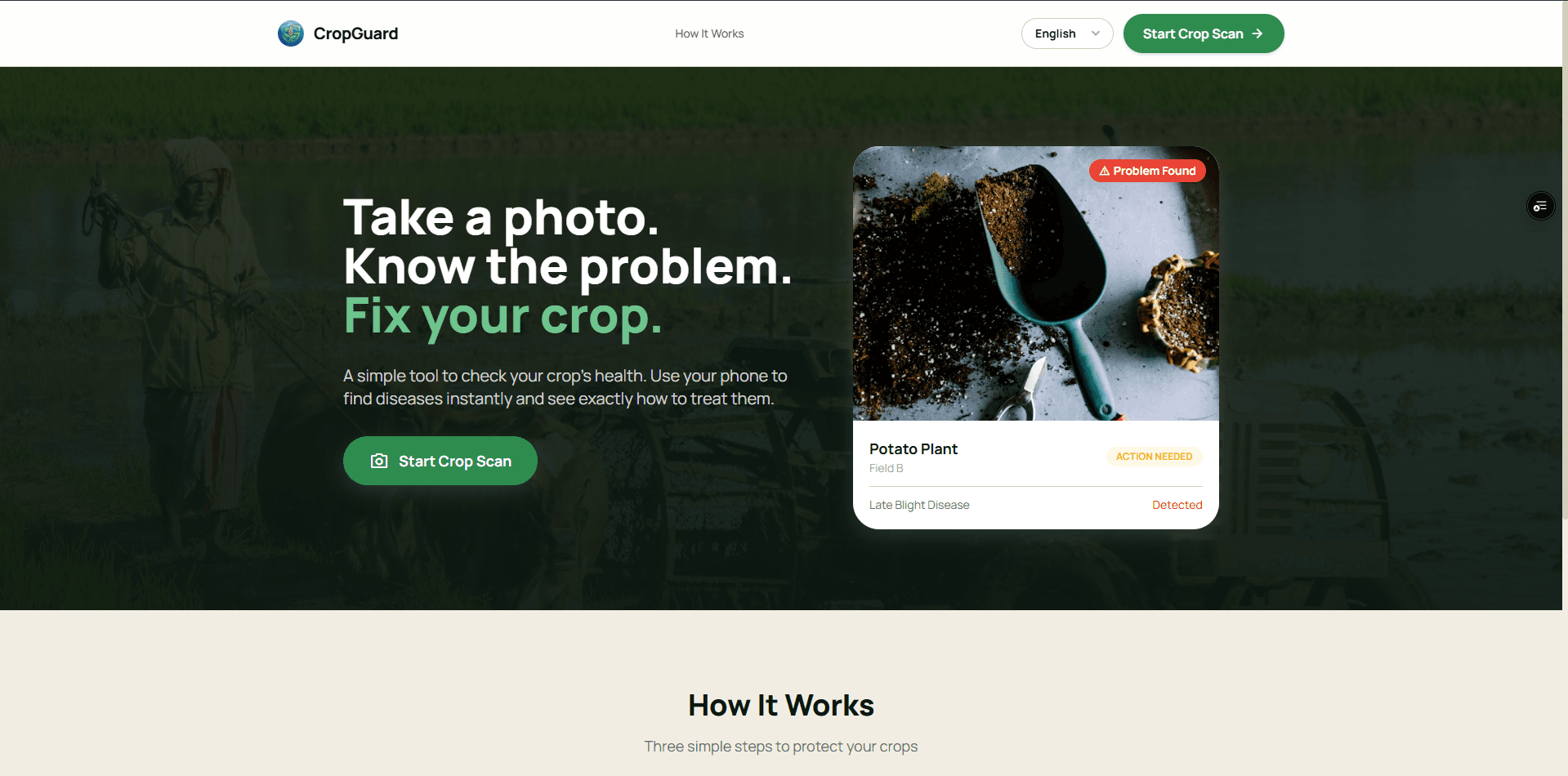
Shipped on CropGuard · LogExplain · ArchBlizz
Cross-Platform Mobile Apps
One React Native codebase, Android and iOS, talking to the same backend as your web app.
React Native app for Android and iOS
Camera, location, and push notifications
Offline-tolerant sync
Store submission support
Shipped on CropGuard · Patient Monitoring System
Not sure which one your idea is? Describe it in a message and I will tell you straight whether it suits me or someone else.
Expertise
Technical toolkit.
The tools I would be comfortable being paid to use tomorrow morning, across hardware, web, mobile, and data.
Electronics & IoT
ESP32
Arduino
Sensors & Interfacing
Languages
TypeScript
JavaScript
Python
C
C++
Web & Backend
React
Next.js
Node.js
REST APIs
Databases
Supabase
MySQL
MongoDB
Projects
Work that is running now
Three I would show a new client first. Each went the whole way, from hardware through backend and interface to deployment, and most have a live demo you can open now.
2025
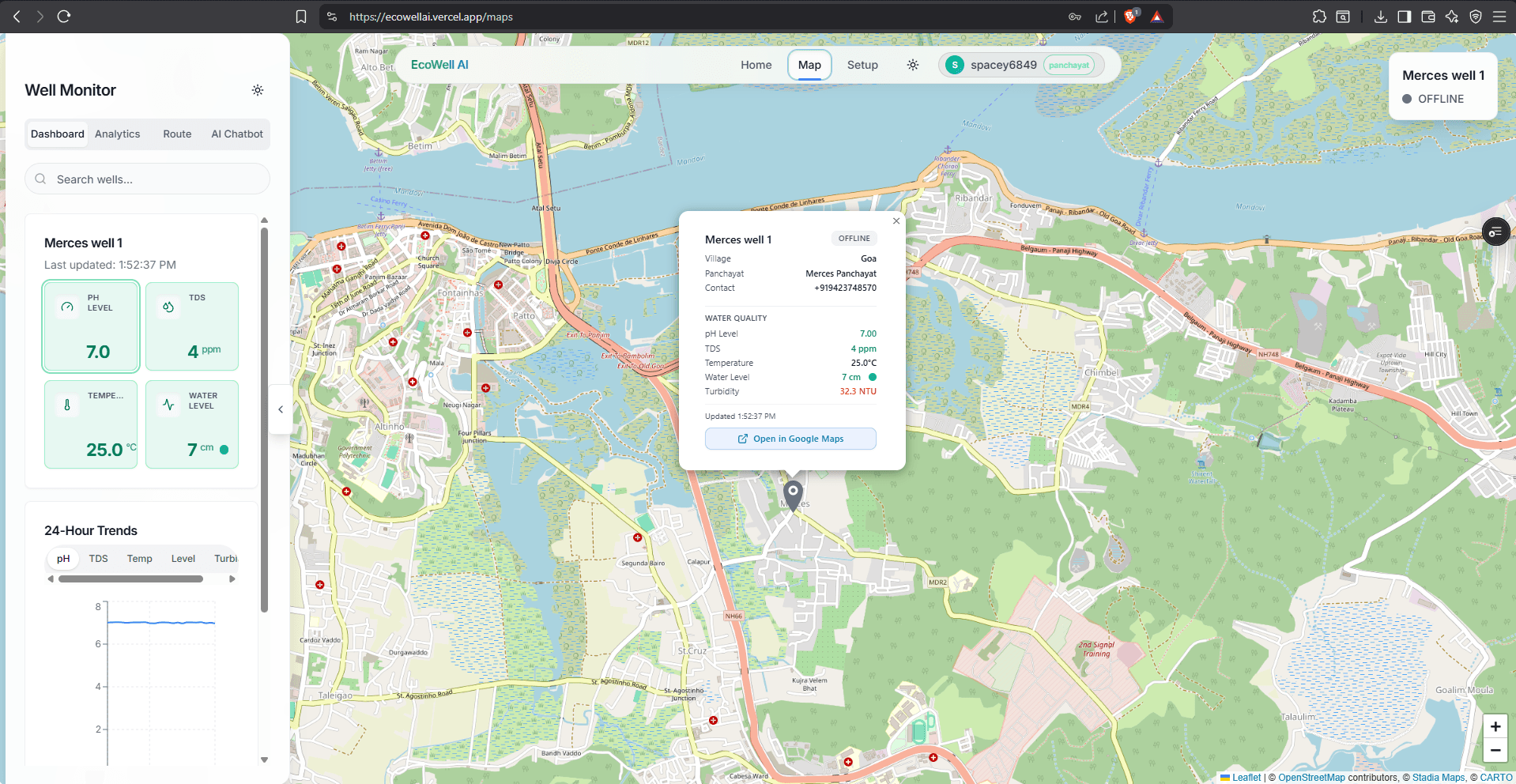
Smart Well Management
Smart well management with EcoWell AI: real-time monitoring, secure access, and interactive maps for groundwater insights. Built with Next.js and Supabase.
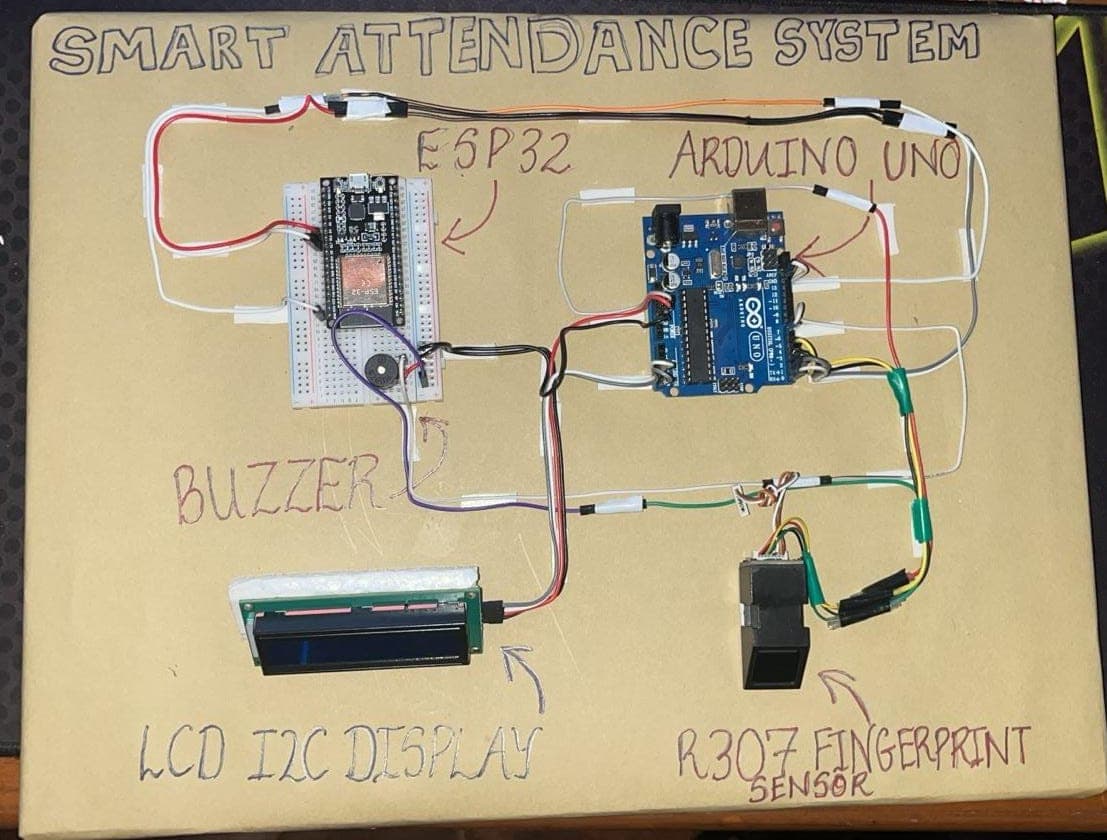
A dual biometric attendance system with hardware integration, a web interface, and automated email reporting, reachable over the local network or a phone.
Hiring someone in another country comes down to trust. This is how a project runs from the first message to handover.
01
Step 01
We talk it through
A 30-minute call or a long email thread, whichever you prefer. I ask what the system has to do, who uses it, and what you already have running.
02
Step 02
You get a scope and a price
You get a written breakdown of what I will build, what falls outside the scope, the timeline, and a fixed price or rate. No surprise line items later.
03
Step 03
I build in weekly slices
You get something clickable each week and a short note on what changed, so you can steer the build while it still costs nothing to change.
04
Step 04
Handover
Source code in your repo, deployed and running, with setup docs. I fix bugs free for two weeks after launch.
Recognition
Where the shipping habit came from
Five podium finishes at national and regional hackathons. Judges scored these builds against other teams, under a deadline, in front of a room.
01
1st Place2024
Smart India Hackathon 2024 (Internal Round)
AITD
02
2nd Place·
HackForge 2025
Padre Conceicao College of Engineering
2025
03
3rd Place·
Smart India Hackathon 2025
Internal, Software & Hardware editions
2025
02
2nd Place·
Lenovo LEAP Culmination Event
Artificial Intelligence category
2025
10
Top 10·
National MedTech Hackathon
Goa
2025
Timeline
Experience & education
Where I have worked and what I did there: Android systems at The Grit City, web at All Right Systems, plus earlier frontend, QA, and AI roles.
Aug 2026 – PresentCurrentHybrid
AI & Android Systems Engineering Intern
The Grit City · Internship
Building DroidSwarm, a remotely managed Android device cluster with zero-touch provisioning that supports devices back to Android 13, and orchestrating automated test runs across multiple Android versions.
Jul 2026 – PresentCurrentUnited States (Remote)
Web Developer
All Right Systems · Full-time
Building a restaurant management platform that turns daily operational data into profitability-focused insights, including AI analytics that benchmark a venue against others in its category.
Apr 2026 – Aug 2026Remote
Core Developer
EPICFORCE.AI · Internship
Built a custom WordPress plugin extending wp-admin with 10+ modules, including Decision Academy, Exercise Library, Reports, Automations, and Integrations, plus user progress tracking, notifications, and journey pages.
Mar 2026 – Apr 2026Goa, India (Remote)
Quality Assurance Tester
BitMento™ · Internship
Tested BitMento's EdTech platform and reported UI/UX issues with detailed reproduction steps, working remotely with the product team to improve usability and feature reliability.
Sep 2025 – Nov 2025Noida, India (Remote)
Front-End Developer
PTWO Technologies · Internship
Developed responsive React interfaces from Figma designs, improving maintainability through reusable, component-based architecture.
Jun 2025 – Jul 2025Goa, India
Artificial Intelligence Intern
BharatCares™ · Internship
Applied machine learning and NLP to text analysis, and built conversational AI flows in Botpress with intent recognition and response handling.
FAQ
Questions clients ask
These come from clients weighing up whether to hire someone remote. Short answers, no sales language.
Do you work with clients outside India?
Yes. I work remotely with clients in the US, UK, UAE, Singapore, Australia, Canada, and across Europe. I sit in India Standard Time (UTC+5:30), which gives you a morning overlap with Europe and the Gulf, and an evening overlap with US East Coast. For US Pacific clients I take calls early in my morning and keep the rest async.
Where are you based?
Goa, India. I work remote, including with teams in Noida. I travel within India for hardware installs and on-site commissioning when a project needs it.
What kind of projects do you take on?
Four kinds: IoT and connected hardware (ESP32, ESP8266, Arduino, sensors, cloud dashboards), full-stack web apps (Next.js, React, TypeScript, Supabase), AI features inside existing products (LLM chat, image classification, OCR), and cross-platform mobile apps in React Native. Projects that mix hardware and software are the ones I most enjoy.
How do you price projects?
Three ways, depending on how well-defined the work is. A fixed price for a scoped build, a monthly retainer for ongoing work, or an hourly rate for consulting and short fixes. I quote after we scope the work, because a number without a scope is a guess.
How long does a typical project take?
A focused web app or dashboard lands in two to five weeks. IoT builds run four to eight weeks, because I have to source the hardware and test it in place. You get a specific timeline in the written scope and see working progress each week.
Can you handle both the hardware and the software?
Yes, and that is the main reason to hire me. On Smart Well Management and Smart Waste Management I picked the sensors, wrote the ESP32 firmware, designed the database, built the Next.js dashboard, and deployed it. You skip the firmware contractor and web agency who blame each other when the numbers look wrong.
Who owns the code?
You do. Your code sits in your repository from the start, or I transfer it at handover with setup documentation and credentials. You rent no hosting from me.
What are you working on right now?
I'm a Web Developer at All Right Systems, a US company, working remotely, and an AI & Android Systems Engineering Intern at The Grit City, where I'm building DroidSwarm, a remotely managed Android device cluster. I take freelance projects alongside both. Earlier roles: core developer at EPICFORCE.AI, QA tester at BitMento, frontend developer at PTWO Technologies, and AI intern at BharatCares. I'm in my final year of a B.E. in Electronics & Computer Engineering at Agnel Institute of Technology and Design, Goa, graduating in 2027.
What's your tech stack?
Web and mobile: Next.js, React, React Native, TypeScript, JavaScript, Node.js, Tailwind CSS. Backend and data: Supabase, PostgreSQL, MySQL, MongoDB, FastAPI, PHP, REST APIs. Hardware: ESP32, ESP8266, Arduino, 8051, sensor interfacing, C and C++. AI: LLM integration, image classification, OCR, Python.
How do we start?
Send a message through the contact form on this site, or email mosesrodrigues10@gmail.com with a couple of lines about what you want built. I reply within about a day, often with questions. If it fits, you get a written scope and price before I write any code.
Something not covered here? Email me. I answer each message myself.
Contact
Tell me what you're trying to build
A couple of sentences is enough to start. I read each message myself and reply within about a day, including a straight no when the work is a poor fit.